
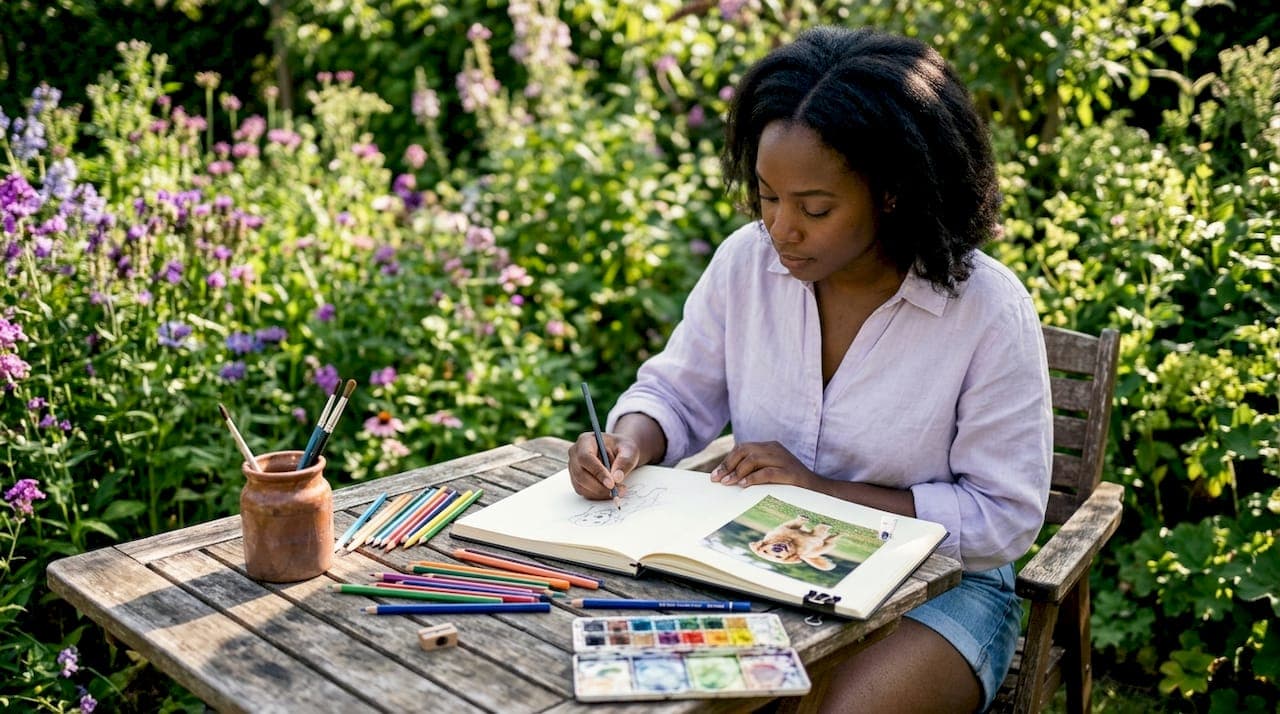
Turning pet pictures into art is the process of converting a photograph of your pet into a personalised, hand-crafted or digitally rendered artwork that captures their likeness and character. This practice sits within the broader field of custom pet portrait artwork, a category that spans oil painting, watercolour illustration, and AI-generated digital styles. Pet owners commission these pieces as keepsakes, gifts, and memorials. The result is something a photograph alone cannot achieve: a piece of art that expresses personality, not just appearance. Done well, a custom pet art print becomes one of the most meaningful objects in a home.
How to select the best photos for pet pictures into art
Photo quality is the single biggest factor in whether your final portrait looks like your pet or a generic animal. Artists and AI tools alike depend on clear, detailed source images to reproduce breed-specific markings, eye colour, and facial structure accurately.
The best photos share a few consistent qualities:
- Natural daylight, no flash. Flash flattens features and creates unnatural shadows. Natural daylight photos without flash produce the sharpest, most colour-accurate results for pet portraits.
- Eye-level composition. Shooting from your pet's eye level captures their expression far better than photos taken from above. An eye-level angle also gives the artist a true sense of proportion.
- Sharp focus on the face. The eyes and nose are the emotional centre of any portrait. A blurred face cannot be corrected in the artwork.
- Neutral or simple background. Busy backgrounds distract the artist and can obscure your pet's outline, making it harder to isolate their form.
- Multiple reference photos. Send several images showing different angles if your pet has distinctive markings on their side, back, or ears.
Common mistakes include submitting screenshots from videos, heavily filtered social media images, or photos taken in dim indoor lighting. These reduce detail and make accurate colour matching nearly impossible.
Pro Tip: If your pet has heterochromia or unusual eye colouring, include a close-up photo of their face alongside the main portrait shot. Artists need to see the exact shade to reproduce it faithfully.
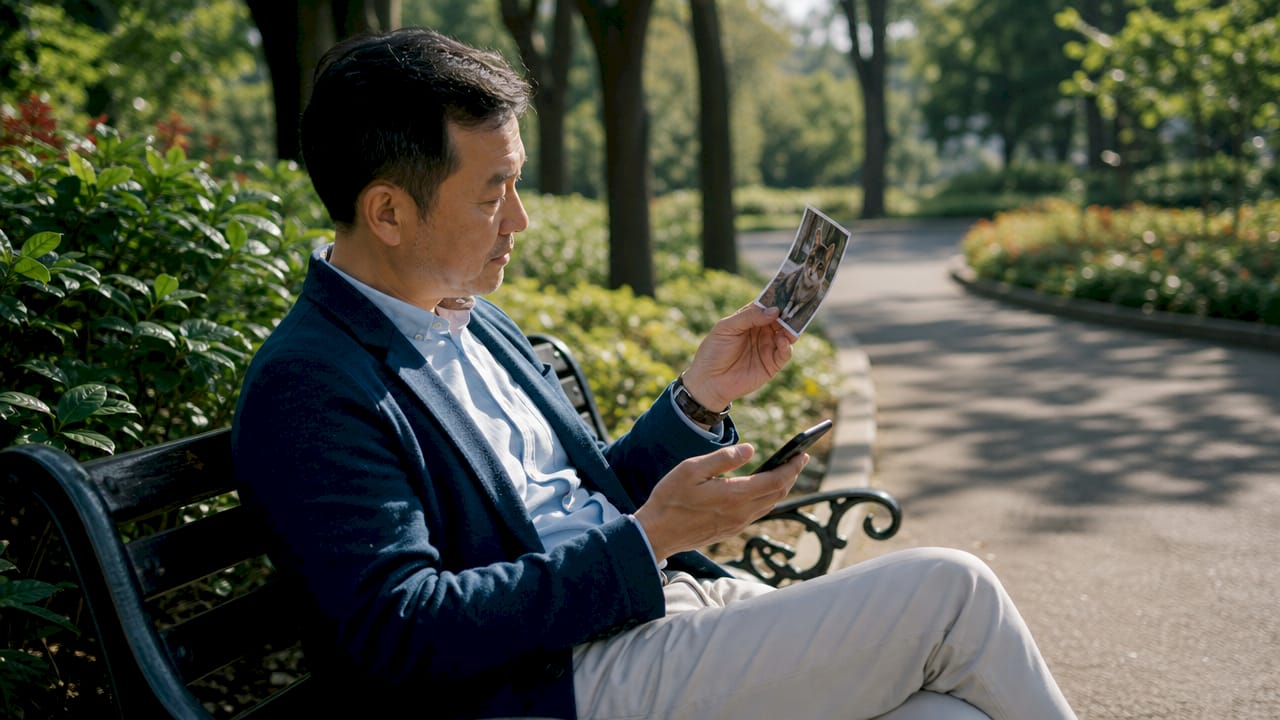
Clear photo input and revision feedback are the two factors most consistently linked to client satisfaction in custom pet portrait work. Getting the source image right saves time and avoids disappointment later.
What artistic styles work best for pet portrait artwork?
The style you choose shapes the entire mood of the finished piece. Pet portrait artwork ranges from traditional hand-painted oils to AI-generated digital art, and each approach suits different tastes, budgets, and display contexts.
Traditional hand-painted portraits
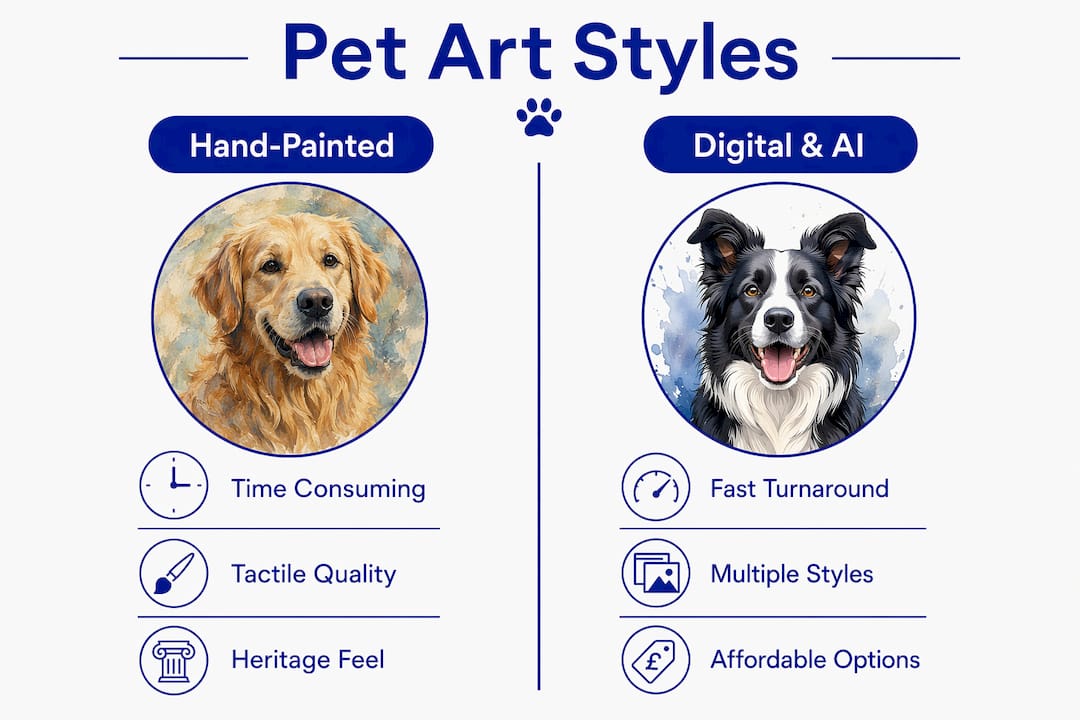
Traditional hand-painted portraits take longer to produce but deliver a tactile, heritage quality that digital prints cannot replicate. Oil painting in particular suits formal home interiors and makes a strong statement as a large wall piece. Pastel and pencil portraits work well for a softer, more intimate feel. The craftsmanship involved means each piece is genuinely unique.
Digital and AI-generated styles
AI tools apply styles like Renaissance, watercolour, cartoon, and fantasy themes automatically from a single photo upload. The speed is the main advantage: you can see multiple style options quickly without committing to one. The trade-off is that AI-generated art can sometimes lack the fine detail that a skilled human artist produces around fur texture and eye depth.
Themed portrait styles
Themed portraits are the fastest-growing category in custom pet art prints. Popular themes include royal, astronaut, fantasy hero, watercolour storybook, and traditional oil painting, each reflecting a different personality or décor preference. A royal pet portrait suits a regal, dignified cat or dog. An astronaut portrait works brilliantly for an adventurous, curious pet. A fantasy hero portrait transforms your pet into a knight or legend, which makes an exceptional gift.
The table below compares the main approaches by key criteria:
| Style category | Turnaround | Best suited for | Typical finish |
|---|---|---|---|
| Hand-painted oil | Longer | Formal décor, large wall art | Canvas, textured |
| Watercolour illustration | Medium | Gifts, storybook feel | Print on paper or canvas |
| AI-generated digital | Fast | Multiple style previews, budget-conscious | High-resolution digital file or print |
| Themed portrait (royal, astronaut, etc.) | Medium | Personality-led keepsakes, gifts | Canvas or acrylic glass |
Matching the style to your pet's personality and your home's aesthetic produces the most satisfying result. A bold, graphic pop art style suits a modern flat; a soft watercolour suits a cottage or nursery.
How does the pet portrait creation process work?
The creation process follows a clear sequence, and understanding each step helps you get the best result without unnecessary back-and-forth.
- Upload your photo. Submit the clearest image you have, following the photo selection guidance above. Most services, including Furonaut, accept uploads directly through their website at furonaut.uk/create.
- Receive a digital proof. Customers typically receive a digital proof within 1–2 business days and can request edits to eye colour, markings, and background before any printing occurs. This step is critical.
- Review the proof carefully. Check eye colour, ear shape, and breed-specific markings against your reference photos. These details are far easier to correct at the proof stage than after printing.
- Request revisions. Good services offer revision rounds before final approval. Furonaut allows customers to approve up to three previews before any payment or printing takes place.
- Approve and print. Once you confirm the proof, the portrait moves to print. At this point, the artwork is locked, so thorough review in step three matters enormously.
- Receive your portrait. Furonaut ships to 21 countries with shipping included in the price.
Experienced pet owners check subtle details such as eye colour, ear shape, and breed-specific markings in digital proofs before approving prints. Skipping this step is the most common cause of disappointment with the final product.
Pro Tip: Print your digital proof at home before giving final approval. Colours on screen can differ from printed output, and a quick home print reveals any tonal issues before the canvas is produced.
Client-artist collaboration and clear communication are the defining factors in whether a portrait truly captures a pet's personality. The more specific your feedback at the proof stage, the closer the final piece will be to what you imagined.
Tips for printing and displaying your pet artwork
The print material you choose affects how the finished artwork looks on your wall as much as the artistic style itself.
- Canvas. Canvas gives a warm, painterly feel and suits traditional and watercolour styles. It absorbs light rather than reflecting it, which makes it comfortable to view from multiple angles.
- Acrylic glass. Acrylic glass prints produce vivid, high-contrast colour and a modern finish. They work particularly well for themed and AI-generated portraits where bold colour is central to the design.
- Resolution matters for size. AI-generated exports can reach 4K resolution, which maintains sharpness on canvases up to 16x20 inches. For larger prints, always confirm the output resolution before ordering.
- Size selection. A portrait intended as a gift suits a smaller format, typically A4 or A3. A wall centrepiece works best at A2 or larger, where facial detail reads clearly from across the room.
- Memorial display. For a pet memorial portrait, many owners place the artwork alongside a small shelf display with their pet's collar or a favourite toy. The portrait anchors the tribute without feeling clinical.
- Care and preservation. Keep canvas prints away from direct sunlight to prevent fading. Acrylic glass can be wiped clean with a soft, damp cloth. Avoid hanging either material in rooms with high humidity, such as bathrooms or kitchens.
A well-chosen print material and display position extend the life of the artwork and keep it looking its best for years.
Key takeaways
Turning pet pictures into art produces the most satisfying results when photo quality, style choice, and thorough proof review work together from the start.
| Point | Details |
|---|---|
| Photo quality is foundational | Use natural daylight, eye-level shots, and sharp focus on the face for the best results. |
| Style should match personality and décor | Choose between oil, watercolour, digital, or themed portraits based on your pet's character and your home's aesthetic. |
| Proof review prevents costly errors | Check eye colour, markings, and ear shape in the digital proof before approving any print. |
| Print material shapes the final look | Canvas suits traditional styles; acrylic glass suits bold, modern, or themed portraits. |
| Memorial portraits need thoughtful display | Pair a memorial portrait with personal mementoes to create a meaningful tribute. |
Why the proof stage changed how I think about pet portraits
Most people focus almost entirely on choosing the right style and forget that the proof stage is where the portrait is actually made or broken. I have seen owners approve a proof quickly because the overall composition looked good, only to receive a canvas where their dog's eyes were the wrong shade of amber. That detail, small on screen, becomes impossible to ignore on a 40x50 centimetre canvas above the sofa.
The counterintuitive truth is that the best pet portraits come from owners who slow down at the proof stage, not from those who submit the best photos. A great photo gives the artist the raw material. Clear, specific feedback at the proof stage gives them the direction. Both are necessary, but most guides focus only on the photo.
I also think the emotional weight of a memorial portrait is underestimated. A storybook-style watercolour of a cat who has passed is not just decoration. It is a daily reminder of a relationship. That is a different kind of object than a framed photograph, and it deserves the same care in production that you would give to any meaningful commission. Choose your style for the feeling it will carry, not just the look.
— Motiejus
Furonaut: custom pet portraits made to your approval
Furonaut creates custom pet portraits across six distinct themes, including Astronaut, Royal, and Fantasy Hero, giving you a genuine range of styles to match your pet's personality and your home.
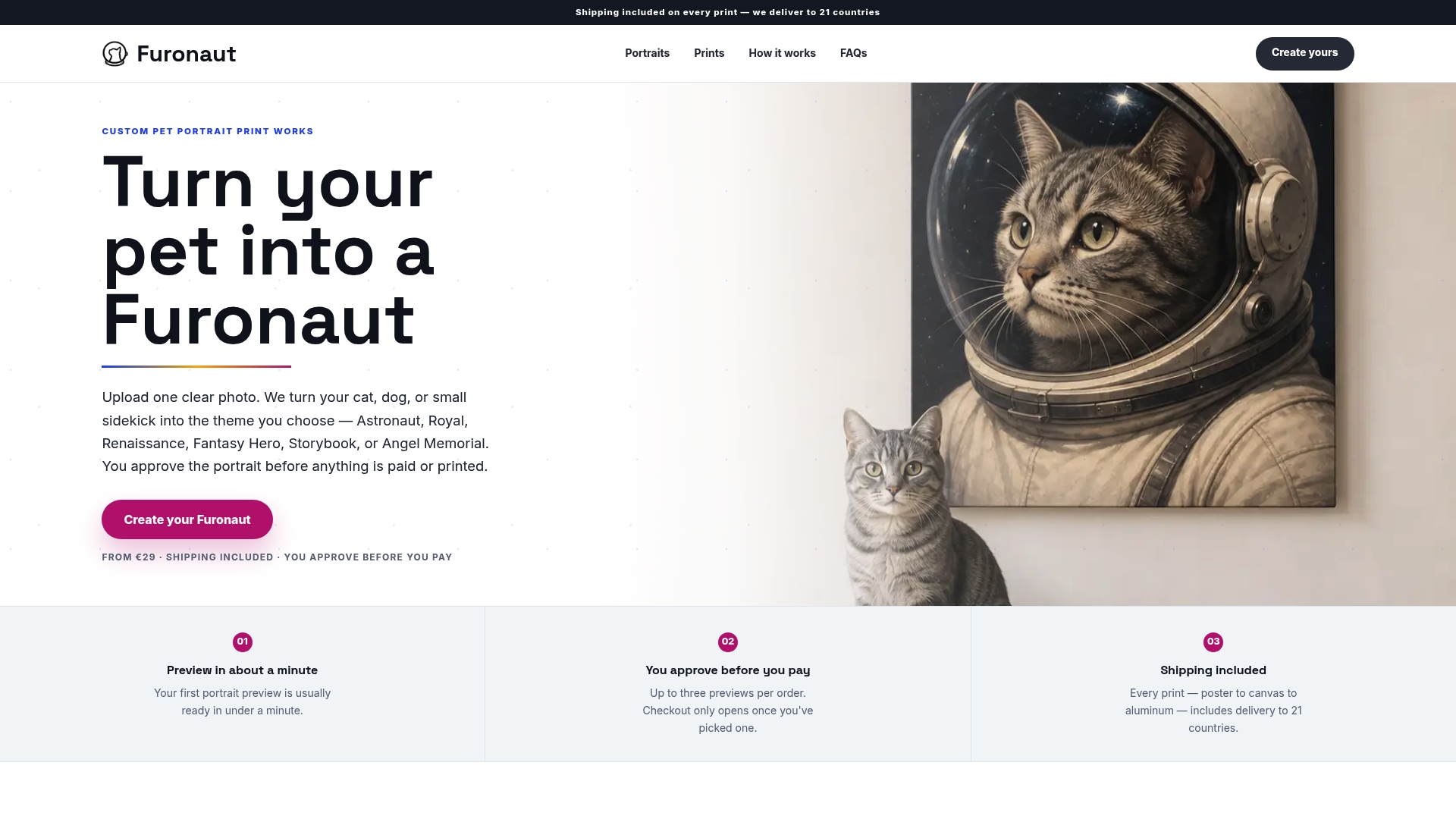
What makes Furonaut different is the approval process. You see up to three previews before any payment or printing takes place. That means you can refine the portrait until it truly looks like your pet, not a generic version of them. Furonaut covers cats, dogs, and smaller pets, and ships to 21 countries with shipping included. Whether you are creating a keepsake, a gift, or a pet memorial portrait, you can start your portrait today and see a preview before you commit.
FAQ
What makes a good photo for a pet portrait?
The best photos use natural daylight without flash and are taken at eye level with sharp focus on the pet's face. Avoid screenshots, heavily filtered images, and photos taken in dim indoor lighting.
How long does a custom pet portrait take?
Turnaround times vary by style and service. Digital proofs typically arrive within 1–2 business days, with additional time for revisions and printing. Furonaut allows up to three preview rounds before printing begins.
Can I turn a pet photo into art if my pet has passed away?
A memorial portrait is one of the most common uses for custom pet art prints. Services like Furonaut offer a dedicated angel memorial theme designed specifically for this purpose.
What is the difference between AI-generated and hand-painted pet portraits?
AI tools generate multiple styles quickly from a single upload, while hand-painted portraits take longer but offer a tactile, unique quality. AI suits owners who want speed and variety; hand-painted suits those who prioritise craftsmanship and a one-of-a-kind finish.
What print material should I choose for a pet portrait?
Canvas suits traditional and watercolour styles with its warm, painterly feel. Acrylic glass produces vivid colour and a modern finish, making it ideal for themed or digital portraits. Choose based on the style of the artwork and the room where it will hang.